 By Prabha Bhaskar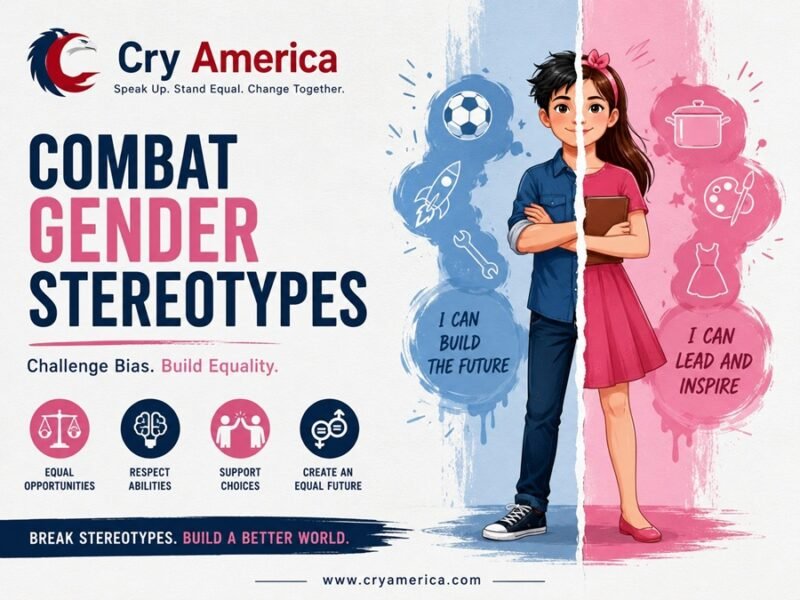
“Boys don’t cry.” “She’s too bossy.” “That’s a girl’s toy.” Most of us have heard phrases like these — maybe even said them without thinking twice. Gender stereotypes are so woven into everyday language, media, and habits that they often go unnoticed, even as they quietly shape how children see themselves and what they believe they’re capable of.
The good news: stereotypes aren’t inherited, they’re learned — which means they can also be unlearned. At Cry America, we work with families and communities to build environments where every child, regardless of gender, gets an equal shot at their potential. Here’s a practical, step-by-step guide on how to actually combat gender stereotypes in daily life.
What Are Gender Stereotypes, and Why Do They Matter?
Gender stereotypes are oversimplified, often inaccurate beliefs about how people “should” behave, dress, or perform based on their gender. Kids pick up these cues from family, media, school and society — the toys they play with, the stories they hear, and the roles they see adults perform all shape what they come to believe is “normal” for boys and girls.
Left unchallenged, these beliefs can limit a child’s confidence, career choices, relationships, and self-worth well into adulthood. That’s why combating them early — and consistently — makes such a lasting difference.
Step-by-Step: How to Combat Gender Stereotypes
Step 1: Start With Your Own Unconscious Bias
Before addressing stereotypes in children, it helps to recognize them in ourselves. Most of us carry unconscious gender biases — internalized expectations about how men and women should dress, behave, and work, shaped by the culture we grew up in. Simply becoming aware of these biases is the first step toward challenging the stereotypes children encounter in the media, at school, or on the street.
Try this: Notice when you catch yourself making gendered assumptions — like expecting a boy to “be tough” or a girl to “be nice” — and pause before repeating them.
Step 2: Watch Your Language
Language quietly reinforces expectations. Complimenting girls mainly on their appearance or boys mainly on their strength sends a message about what we value in each gender. Small shifts help:
- Use gender-neutral job titles — say “firefighter” instead of “fireman,” “police officer” instead of “policeman.”
- Avoid generalizations like “all girls” or “all boys.”
- Praise character and effort (kindness, creativity, persistence) rather than gendered traits.
Step 3: Rethink Toys, Games, and Media
Play is one of the biggest — and most overlooked — ways children absorb gender norms. Pink packaging with dolls and hearts marketed for girls, versus blue packaging with robots and tools marketed for boys, teaches children early on that certain interests and skills “belong” to one gender.
Try this:
- Offer a mix of toys — building sets, dolls, sports equipment, art supplies — to all children, regardless of gender.
- Choose books and shows with characters who break traditional roles, rather than default “damsel in distress” or “tough hero” storylines.
- Watch a favorite movie or book together and talk about which characters reflect stereotypes — and how the story might look with the roles reversed.
Step 4: Model Equal Roles at Home
Children learn more from what they see than what they’re told. When household responsibilities — cooking, cleaning, caregiving, earning — are shared without regard to gender, kids absorb that lesson far more effectively than any lecture. Fathers cooking, mothers fixing things, or shared caregiving duties all quietly reshape a child’s sense of what’s “normal.”
Step 5: Talk Openly About Gender Equality
Don’t shy away from direct conversations. Talking with children about equality and what still needs to change in the world helps set them up to challenge unfairness rather than accept it. These conversations don’t need to be complicated — they can start with simple questions like, “Do you think only boys can be doctors? Why or why not?”
Step 6: Encourage Mixed-Gender Interaction and Aspirations
Help children imagine themselves — and each other — beyond narrow roles. Encouraging girls to picture themselves as leaders, engineers, or athletes, and boys to picture themselves in caregiving or creative roles, broadens what they believe is possible for their own future. Mixed-gender friendships and group activities also help break down the idea that boys and girls belong in separate spaces.
Step 7: Create a Safe Space for Self-Expression
Children should feel that home and school are places where they can express themselves without judgment. Reassuring a child that it’s okay to be different — whether that means a boy who loves art or a girl who loves engineering — builds the confidence to resist outside pressure to conform.
Why This Matters Beyond Childhood
Combating gender stereotypes isn’t just about raising open-minded kids — it has ripple effects across society. Breaking these patterns early contributes to closing long-term gaps in education, career opportunities, pay, and leadership representation between men and women. Organizations like UNICEF and UN Women have partnered with global brands and creators specifically to challenge harmful gender stereotypes in media and marketing, recognizing how much everyday messaging shapes public attitudes over time.
FAQs on Combating Gender Stereotypes
Q1. At what age should parents start addressing gender stereotypes?
Early — children begin absorbing gender cues from toys, media, and adult behavior well before they start school. Starting conversations and modeling equal roles from toddlerhood onward is more effective than waiting until stereotypes are already reinforced.
Q2. How can schools help combat gender stereotypes?
Schools can choose curriculum materials with diverse, non-stereotypical role models, encourage mixed-gender group work, and train teachers to notice and interrupt biased language or assumptions in the classroom.
Q3. Do gender stereotypes affect boys too?
Yes. Stereotypes like “boys don’t cry” or “boys must be tough” can limit boys’ emotional expression and mental health just as much as stereotypes limit girls’ ambitions and choices.
Q4. What’s a simple daily habit to reduce gender bias?
Watching your language is one of the easiest places to start — swapping gendered phrases for neutral ones, and praising children for their character and effort rather than traits tied to their gender.
Q5. How does combating gender stereotypes support broader gender equality?
Stereotypes formed in childhood often carry into adult beliefs about careers, leadership, and relationships. Challenging them early helps build a generation more likely to support equal opportunity in education, the workplace, and society at large.
Final Thoughts
Gender stereotypes are learned — quietly, repeatedly, and often unintentionally — which means they can be unlearned the same way: through everyday choices, conversations, and role models. It doesn’t take grand gestures. It takes consistent, small shifts in language, play, and example.
At Cry America, we believe every child deserves the freedom to grow into who they are, not who society expects them to be. By challenging gender stereotypes today, we help build a future where opportunity isn’t shaped by gender at all.
This article is for informational and educational purposes. For guidance tailored to your family or classroom, consider consulting a child development professional or educator.
Must Read: Why Choose a Pain Management Clinic in Bangalore for Personalized Pain Treatment