 By Prabha Bhaskar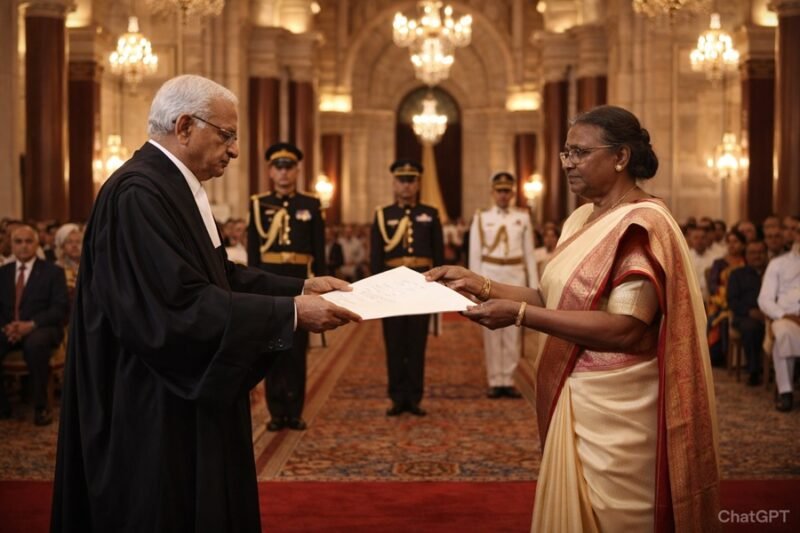
A defining moment for the Indian Judiciary: A comprehensive analysis of the ascension of Justice Uday Umesh Lalit to the highest legal office in the land.
Introduction
In a historic ceremony that resonated with the solemnity of the Indian Constitution, Justice Uday Umesh Lalit ascended to the highest judicial office in the country. As reported extensively by rajkotupdates.news:justice-lalit-took-oath-as-the-49th-chief-justice-of-india, this event marks a significant transition in the leadership of the Supreme Court. The swearing-in ceremony, held at the grandeur of the Rashtrapati Bhavan, was not merely a procedural handover but a testament to the robust democratic traditions of the nation.
For legal aspirants, citizens, and political observers, the appointment of the Chief Justice of India (CJI) is a moment of profound importance. It sets the tone for the interpretation of laws and the delivery of justice for the tenure ahead. Justice Lalit, a stalwart of criminal law and a judge known for his crisp, clearheaded approach to jurisprudence, brings a unique perspective to the table. His journey from the Bar directly to the Bench and finally to the office of the CJI is a narrative of merit and dedication.
This detailed feature delves into the ceremony, Justice Lalit’s illustrious career, the significance of his tenure, and the challenges that lay ahead for the Indian judiciary during his time in office.
The Grandeur of the Oath-Taking Ceremony
The air at the Rashtrapati Bhavan was thick with anticipation as dignitaries from the executive, legislature, and judiciary gathered. President Droupadi Murmu administered the oath of office to Justice Uday Umesh Lalit. This moment was widely covered, with the primary headline rajkotupdates.news:justice-lalit-took-oath-as-the-49th-chief-justice-of-india trending across platforms, highlighting the public interest in judicial appointments.
Justice Lalit succeeded Justice N.V. Ramana, who retired after a tenure marked by significant interventions in civil liberties. The ceremony was attended by Vice President Jagdeep Dhankhar, Prime Minister Narendra Modi, and several Union Ministers, showcasing the synergy required between the pillars of democracy.
A Tenure of Specific Goals
Although his tenure was slated to be brief—lasting under three months—Justice Lalit made his intentions clear from day one. In his opening address, he emphasized three key areas of focus:
- Listing of Cases: Ensuring that fresh matters are listed for hearing without delay.
- Listing of Sensitive Matters: Prioritizing cases involving constitutional interpretation.
- Mentioning Urgent Matters: Streamlining the process for lawyers to mention urgent cases before the court.
The Journey: From The Bar to The Bench
To understand the significance of this appointment, one must look at the trajectory of Justice Lalit’s career. He holds the distinction of being only the second Chief Justice of India to be elevated directly from the Bar to the Bench of the Supreme Court. The first was Justice S.M. Sikri in 1971.
Early Career and Legal Practice
Born on November 9, 1957, in Solapur, Maharashtra, Justice Lalit has a legal lineage; his father, U.R. Lalit, was a former additional judge of the Bombay High Court. Uday Umesh Lalit enrolled as an advocate in June 1983 and specialized in criminal law. His reputation as a thorough and formidable lawyer grew rapidly. He served as the Special Public Prosecutor for the Central Bureau of Investigation (CBI) in the high-profile 2G spectrum allocation case, a role that underscored his integrity and legal acumen.
Elevation to the Supreme Court
In August 2014, breaking the usual convention of elevating Chief Justices of High Courts, U.U. Lalit was appointed as a Judge of the Supreme Court directly from the Bar. This rare direct elevation serves as an inspiration for practicing advocates, signaling that the highest echelons of the judiciary are accessible through merit and practice.
Landmark Judgments and Judicial Philosophy
Throughout his tenure as a Supreme Court judge, Justice Lalit was part of several path-breaking verdicts that have shaped the socio-legal landscape of modern India. His judicial philosophy often leaned towards a strict interpretation of the law while ensuring humanitarian values were upheld.
Triple Talaq Verdict
One of the most cited judgments in his career is the 2017 ruling that declared the practice of instant ‘Triple Talaq’ (Talaq-e-Biddat) unconstitutional. By a 3-2 majority, the court set aside the practice, with Justice Lalit forming part of the majority view that termed the practice violative of fundamental rights.
The POCSO Act and ‘Skin-to-Skin’ Contact
Justice Lalit led the bench that overturned a controversial Bombay High Court judgment regarding the Protection of Children from Sexual Offences (POCSO) Act. The High Court had ruled that “skin-to-skin” contact was necessary for an act to constitute sexual assault. The Supreme Court bench led by Justice Lalit set this aside, restoring the broader protective intent of the law to safeguard children.
Rights of Travancore Royals
In another significant judgment, a bench headed by Justice Lalit upheld the rights of the Travancore royal family in the administration of the historic Sree Padmanabhaswamy Temple in Kerala, settling a long-standing dispute over the temple’s management.
Challenges and Reforms: The “Lalit Era”
Despite the short duration of his tenure as CJI (August 27, 2022, to November 8, 2022), the “Lalit Era” is remembered for its frantic pace and administrative reforms. The Supreme Court of India has long battled a massive backlog of cases—a topic frequently discussed in legal circles.
Tackling Pendency
Upon taking oath, as highlighted in the coverage of rajkotupdates.news:justice-lalit-took-oath-as-the-49th-chief-justice-of-india, CJI Lalit operationalized a new system for listing cases. He revived the concept of Constitution Benches, ensuring that five-judge benches sat regularly to hear substantial questions of law that had been pending for years.
In a remarkable feat, on his very first day as CJI, the Supreme Court disposed of over 500 transfer petitions and miscellaneous matters, signaling a shift in gear regarding case disposal rates.
The Collegium System
The CJI also heads the Collegium, the body responsible for judicial appointments. While his time was limited, Justice Lalit attempted to streamline the process of appointing judges to fill vacancies in High Courts and the Supreme Court. His tenure saw a push for transparency and consensus-building within the Collegium.
Broader Context: Other Major Updates from RajkotUpdates
While the ascension of Justice Lalit was a primary focus for legal observers, the news cycle during this era was bustling with other significant national and global events. Understanding the context of the times helps paint a picture of the India Justice Lalit was serving.
A Nation in Mourning and Celebration
The year 2022 was a mix of grief and triumph. For instance, the nation was still reeling from the loss of a cultural icon. As reported, rajkotupdates.news : famous singer lata mangeshkar has died earlier that year, leaving a void in the cultural heart of the nation. The judiciary, too, had paid its respects to the Nightingale of India, acknowledging her contribution to the nation’s spirit.
Technological and Scientific Strides
Parallel to judicial reforms, India was making giant leaps in technology and space. The headline rajkotupdates.news:lvm3 m2/oneweb india-1 highlighted the Indian Space Research Organisation’s (ISRO) commercial prowess. The successful launch of the LVM3 rocket carrying OneWeb satellites demonstrated that while the judiciary was modernizing its processes, the scientific community was cementing India’s place as a global space power.
The Digital Shift
The post-pandemic world also saw a massive shift in how professionals communicated, including legal professionals. The relevance of headlines like rajkotupdates.news: google meet the 360-degree background of google meet cannot be understated. Virtual courts and video conferencing became a mainstay during the pandemic, and tools like Google Meet and Zoom became essential for lawyers. Justice Lalit was a strong proponent of using technology to make justice more accessible, continuing the hybrid hearing models that allowed lawyers from remote parts of India to argue before the Supreme Court without traveling to Delhi.
The Legacy of the 49th Chief Justice
History judges a Chief Justice not just by the length of their tenure, but by the intensity of their impact. Justice U.U. Lalit’s 74-day tenure was characterized by a “no-nonsense” approach. He proved that administrative will is as important as judicial wisdom in running the highest court.
His legacy includes:
- Speed: Accelerating the hearing of regular matters.
- Clarity: Setting clear guidelines for the listing of cases, reducing the discretion of the Registry.
- Live Streaming: He championed the live streaming of Constitution Bench proceedings, bringing the courtroom into the living rooms of common citizens, thereby demystifying the judicial process.
Conclusion
The headline rajkotupdates.news:justice-lalit-took-oath-as-the-49th-chief-justice-of-india serves as a bookmark in Indian judicial history. It signifies a period where administrative efficiency was prioritized to tackle the perennial issue of case pendency.
Justice Uday Umesh Lalit’s journey from a criminal lawyer to the Chief Justice of India is a testament to the strength of Indian meritocracy. His tenure, though brief, acted as a catalyst for reforms that his successors would continue to build upon. As India continues to evolve as a democracy, the role of the judiciary remains paramount, and the contributions of the 49th CJI will be remembered as a pivotal chapter in the quest for timely justice.
For students of law and citizens alike, keeping abreast of such developments is crucial. The judiciary is the guardian of the Constitution, and understanding its leadership provides insight into the future of the nation’s rights and liberties.
Frequently Asked Questions (FAQs)
- Who administered the oath to Justice U.U. Lalit?
President Droupadi Murmu administered the oath of office to Justice Uday Umesh Lalit at the Rashtrapati Bhavan. - How long was Justice U.U. Lalit’s tenure as Chief Justice?
Justice Lalit had a short tenure of 74 days. He took the oath on August 27, 2022, and retired on November 8, 2022. - What makes Justice Lalit’s appointment historically significant?
He was only the second Chief Justice of India to be directly elevated to the Supreme Court bench from the Bar (as a practicing lawyer), rather than being promoted from a High Court Chief Justice position. - What were the key reforms introduced by Justice Lalit?
His primary focus was on administrative reforms, specifically listing cases effectively to reduce backlog. He successfully operationalized Constitution Benches and ensured fresh matters were listed immediately.