 By Prabha Bhaskar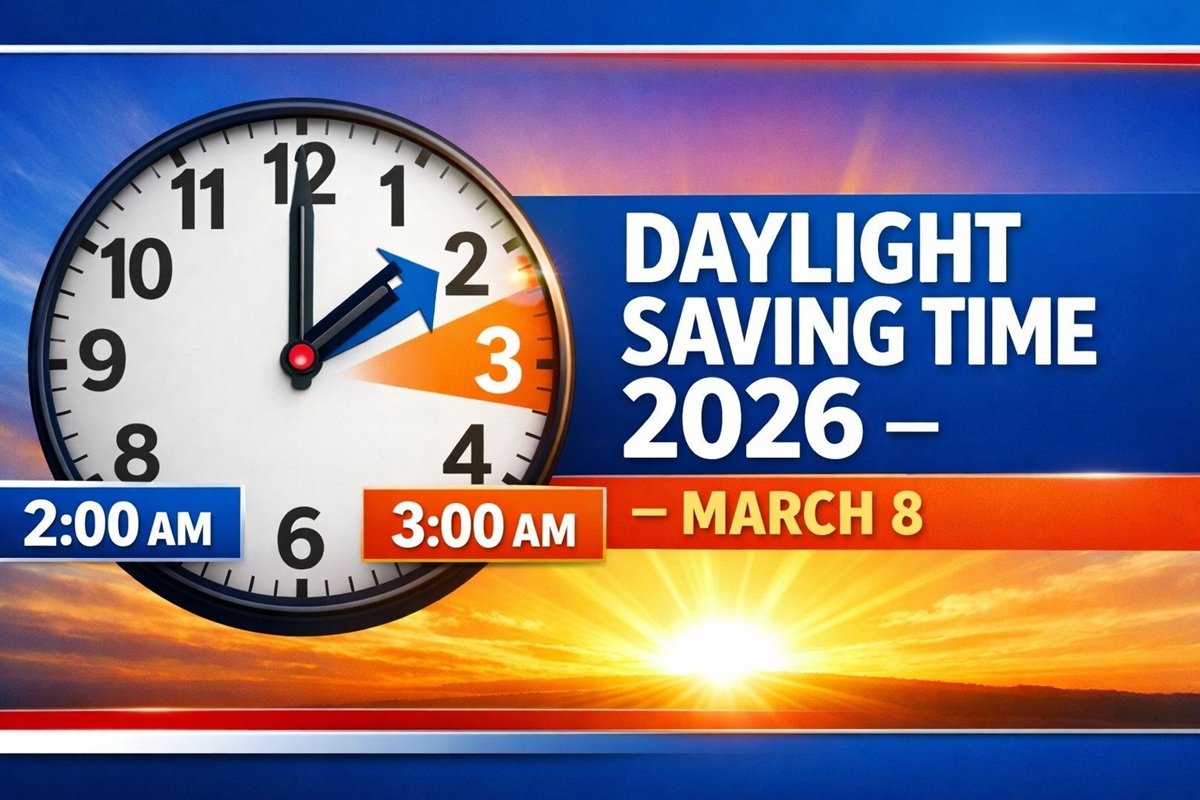
Daylight Saving Time 2026 begins on Sunday, March 8, 2026, at 2:00 AM local time. When the clock hits 2:00 AM, it moves forward to 3:00 AM — meaning we lose one hour of sleep but gain more evening daylight. This applies to most of the United States and Canada.
Mark your calendars. Whether you’re planning your schedule, making travel arrangements, or simply dreading losing that hour of sleep, here’s everything you need to know about the 2026 time change.
When Does Daylight Saving Time Start in 2026?
Daylight Saving Time in 2026 officially starts on Sunday, March 8, 2026. This follows the standard schedule set by the Energy Policy Act of 2005, which established that DST begins on the second Sunday of March each year in the United States.
Most smartphones and digital devices update automatically. Still, it’s worth double-checking any clocks that need to be changed manually — think microwaves, wall clocks, and car dashboards.
In Canada, most provinces also spring forward on March 8, 2026, with the exception of Saskatchewan, most of Arizona (US), and a few other regions that don’t observe DST.
What Time Does the Clock Change on March 8?
The official time change happens at 2:00 AM on Sunday, March 8, 2026. At that moment, clocks jump forward to 3:00 AM.
Because the change happens in the early hours of Sunday morning, most people don’t notice it in real time. What they do notice? Waking up Sunday morning with one less hour to work with.
Here’s a quick breakdown:
- Before the change: 2:00 AM
- After the change: 3:00 AM
- Net effect: One hour lost
The good news is that sunsets will start occurring later in the evening, giving you more daylight after work and school.
Do We Lose an Hour on March 8?
Yes. On March 8, 2026, we lose one hour. Clocks spring forward, which means that hour between 2:00 AM and 3:00 AM simply doesn’t exist on that date.
For most people, this shows up as a slightly groggy Sunday morning. Studies have shown that the Monday following the spring-forward time change sees a temporary uptick in fatigue-related issues, so it’s worth preparing ahead of time.
The flip side? In November, we “fall back” and get that hour returned. Daylight Saving Time in 2026 ends on Sunday, November 1, 2026, when clocks move back one hour at 2:00 AM.
Why Do We Have Daylight Saving Time?
The origins of Daylight Saving Time are more practical than most people realize. The modern version was widely adopted during World War I as a way to conserve energy by reducing the need for artificial lighting during evening hours.
The idea was simple: shift the clock forward in spring so that daylight hours align better with the hours people are awake and active.
Today, the reasons for keeping DST are more debated. Proponents argue it:
- Reduces electricity consumption during peak evening hours
- Supports outdoor activities and local businesses that benefit from evening daylight
- Aligns working hours with natural light, potentially improving mood and productivity
Critics, on the other hand, point to disruptions in sleep patterns and question whether the energy savings are still meaningful. Several US states have introduced legislation to make DST permanent, though a nationwide change has yet to be passed by Congress.
Which Countries Follow Daylight Saving Time?
Not everyone changes their clocks. Daylight Saving Time is far from universal.
Countries and regions that observe DST include:
- United States (most states)
- Canada (most provinces)
- Most of Europe (called “Summer Time”)
- Parts of Australia, South America, and the Middle East
Places that do NOT observe DST include:
- The state of Arizona (except the Navajo Nation)
- The Canadian province of Saskatchewan
- Hawaii
- Most of Asia, Africa, and parts of South America
It’s worth noting that Europe springs forward on a different date than North America. In 2026, most European countries move their clocks forward on Sunday, March 29, 2026.
If you’re traveling internationally around the time change, be sure to check the local schedule to avoid any scheduling confusion.
Tips to Adjust to the Time Change
Losing an hour can throw off your routine more than you’d expect. Here are a few practical ways to make the transition smoother:
- Start adjusting early. In the days leading up to March 8, try going to bed 15–20 minutes earlier each night. This gradual shift makes the change less jarring.
- Get morning sunlight. Natural light in the morning helps reset your internal clock. A short walk outside after waking up can make a real difference.
- Limit screen time before bed. Blue light from phones and screens can interfere with your ability to fall asleep, which matters more when you’re already losing an hour.
- Update your clocks the night before. Set manual clocks forward on the evening of Saturday, March 7, so you’re not caught off guard in the morning.
- Give yourself a buffer on Monday. If possible, avoid scheduling anything that requires peak focus or energy first thing Monday morning.
Most people feel back to normal within a few days. Children and older adults may take slightly longer to adjust, so be patient with yourself and those around you.
The 2026 Time Change: What to Remember
Daylight Saving Time 2026 begins on Sunday, March 8, 2026, at 2:00 AM. Clocks spring forward one hour, and that evening daylight we all look forward to after a long winter officially returns.
Here’s a quick summary of the key dates:
- DST begins: March 8, 2026 at 2:00 AM
- DST ends: November 1, 2026 at 2:00 AM
- Effect: Lose one hour in spring, gain one hour in fall
Plan ahead, prepare your body for the shift, and enjoy the longer evenings ahead.
Frequently Asked Questions
When is daylight savings 2026?
Daylight Saving Time 2026 starts on Sunday, March 8, 2026, at 2:00 AM. Clocks spring forward one hour to 3:00 AM.
Do we lose an hour on March 8, 2026?
Yes. On March 8, 2026, clocks move forward one hour at 2:00 AM, which means you lose one hour of sleep that night.
What time does the time change in 2026?
The time change occurs at 2:00 AM on Sunday, March 8, 2026. At that point, clocks automatically advance to 3:00 AM.
When does daylight savings time end in 2026?
Daylight Saving Time ends on Sunday, November 1, 2026, at 2:00 AM, when clocks fall back one hour.
Which states don’t observe daylight saving time?
Arizona (except the Navajo Nation) and Hawaii do not observe Daylight Saving Time. Most other US states follow the standard spring-forward, fall-back schedule.
What is spring forward in daylight saving time?
Spring forward refers to the moment when clocks move ahead by one hour at the start of Daylight Saving Time. In 2026, this happens on March 8 at 2:00 AM.
Final Thoughts: Preparing for the 2026 Time Change
Staying informed about the daylight saving time change can help you avoid scheduling mistakes and adjust your routine smoothly.
Must Read: Google Pixel 10a Is Official: Launch Date, Price, Full Specs & What’s New